
What Else Is Possible
Racing the inaugural Ironman Ruidoso 70.3

One Small Decision
I did my first triathlon in May of 2002. A friend from high school had signed up for a class that ended with a sprint triathlon, and it sounded like fun, so I started searching online for something similar near me, back when that kind of search actually took some digging. I found a local sprint triathlon, joined a masters swim group and a running group, and signed up.
Todd wasn’t interested in triathlon back then. He was deep into kayaking and competitive paintball, which was very much his thing at the time, so I asked him to come watch. My first triathlon was a reverse sprint, a 5K run, a 12 mile bike, and a 400 yard pool swim. He brought a chair and a book and set up somewhere he could see both the run and bike course.
As I rode past him he yelled, “Your helmet is on backwards!” I stopped to turn it around, and while I was fixing it, a police officer up ahead at the intersection stood with his hand out. I figured that meant stop, so I waited. He yelled, “I’m stopping the cars, you go!” Mistakes and all, I crossed that finish line already wanting to do it again.
The next year I asked Todd if he’d come watch me race again. “No,” he said. “I went last year.” I convinced him to come anyway, and by the time I finished that race, he was standing there thinking he could do this too. We did our first race together two months later, in July of 2003. There’s a good story behind that one too, for another time.
After every race since, I’ve asked myself the same question. What else could I do? What else is possible?
Sometimes it’s a nudge to try a longer distance. Sometimes it’s a new place to race. There were things I was sure I could never do, a full Ironman, a particular hill near our house, and then one day I’d find myself standing on that start line or climbing that hill anyway. Twenty-three years later, Todd and I have raced all over the world together. He still leans toward shorter distances and off road racing, and I still prefer the long stuff with no dirt involved, and somehow that combination of doing our own thing and doing it together has worked for over two decades.
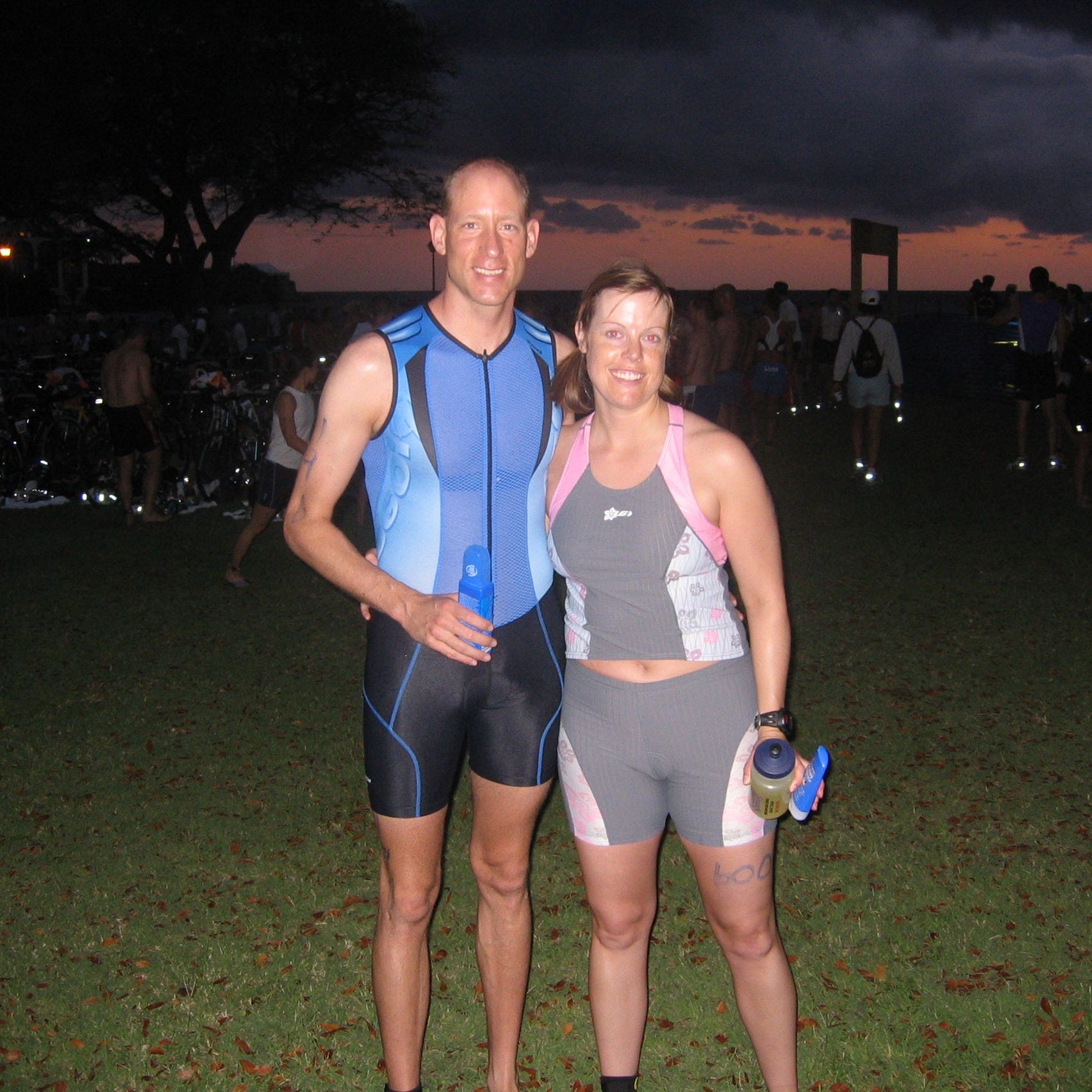
This year the nudge came from home. For the first time, Ironman brought a race to New Mexico.
Back in New Mexico
Ruidoso sits at nearly 7,000 feet in the Sierra Blanca mountains, and it’s a place I already loved before this race existed. My grandfather had a cabin there, and some of my fondest childhood memories are from the golf course with him, where he’d let me play the last thirty yards of every hole. When we heard Ironman was bringing a 70.3 there, we knew we wanted to be part of it.
I’d also been dealing with a high hamstring injury for close to a year at that point, so I genuinely didn’t know what my body would do on race day. I’d had a solid training block leading in, but altitude and injury and racing don’t always cooperate with each other. Going in, I set one intention: let the race come to me. Not chase numbers, just trust my body and respond to whatever the day handed me.
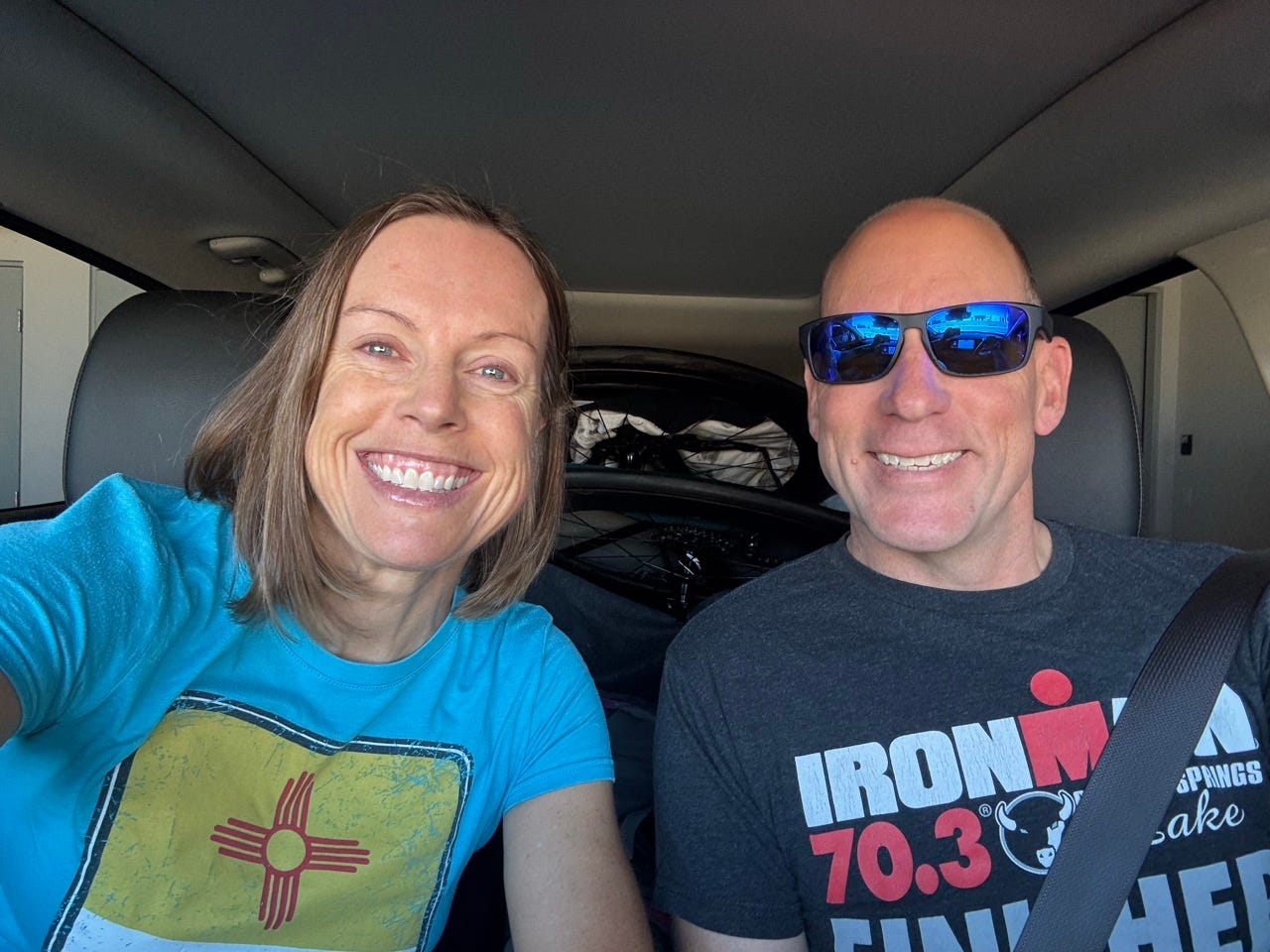
We drove down Friday morning, checked into Ironman Village, and grabbed a picnic lunch while half-listening to the athlete briefing. We drove the bike course, made a grocery run, and got caught in a downpour so heavy the parking lot turned into a small river. The flash flood warning on our phones wasn’t exaggerating. By evening it had cleared, and the rest of the weekend looked nothing like that storm: a deer in our driveway, wild horses on our running route, a pancake breakfast, dinner with friends who were racing too.
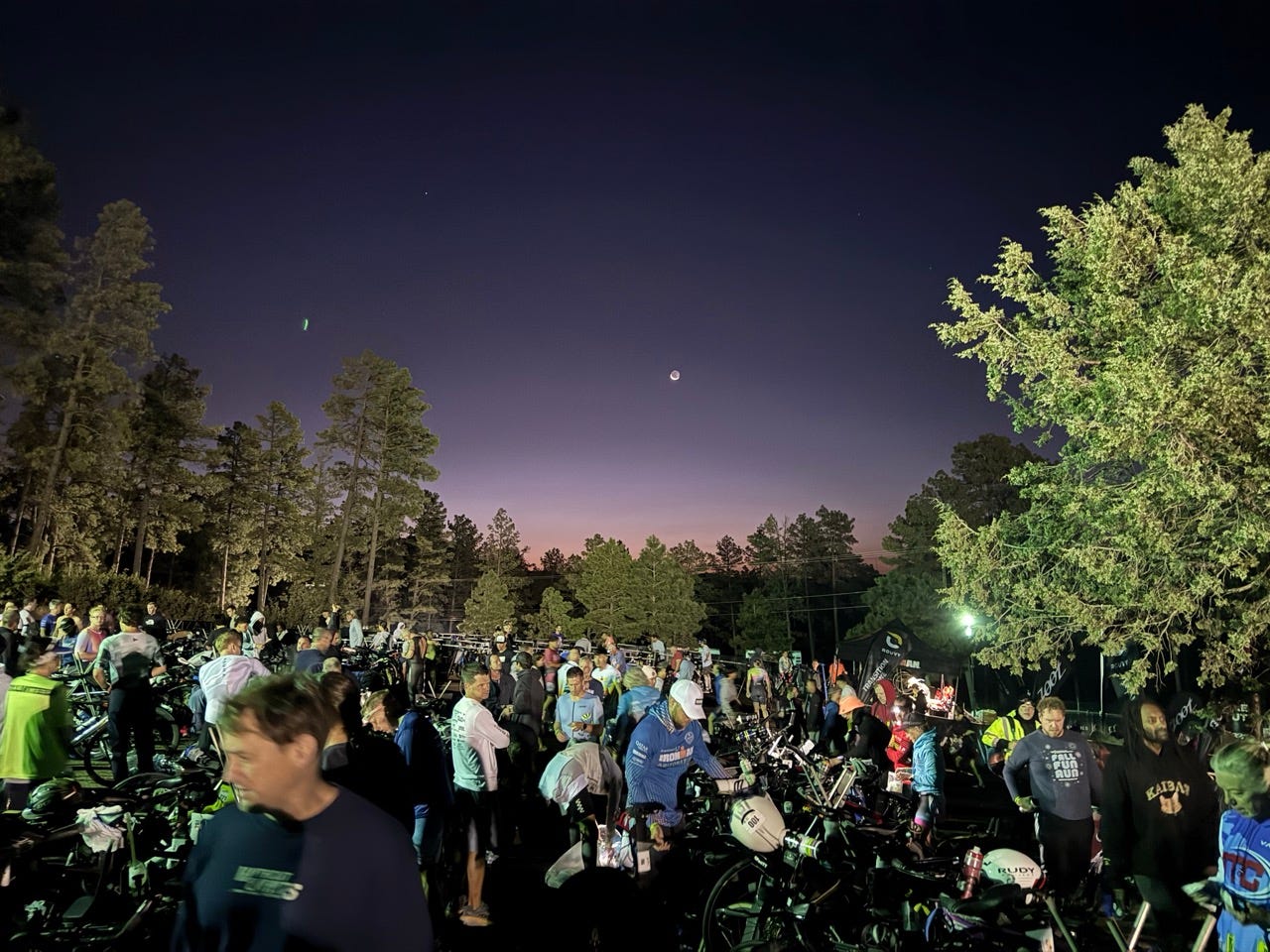
Because the race used two separate transition areas with almost no parking at the lake, we had to shuttle our bikes out the day before and decide what to leave overnight versus carry with us on race morning. We kept our bike bags with us rather than risk them getting soaked again.
Race Morning
We’d planned to wake up at 3:30 and be out the door by 4:00 to catch the shuttle to the lake. Somewhere in the night I woke up certain the alarm was about to go off, but I didn’t check the time, and fell back asleep. When I finally looked at my watch it was 4:00, the exact time we were supposed to already be leaving. We threw on our gear and made it out the door by 4:18. It felt stressful right then, but we still had plenty of time, and I’m fairly confident that’s the last time either of us forgets to set an alarm before a race.
The water was 71 degrees and clear, easy to sight in even with two full loops to swim. I started easy on purpose, knowing altitude can make it hard to catch your breath if you go out too hard. I never felt short of breath, but I felt tired early, tired enough that I just wanted to take a break. What I’ve learned after enough years in open water is that forward momentum matters more than anything else. You can slow down, you can look again on the next stroke, but if you actually stop, it takes a lot to get moving again. So I kept telling myself to be like Dory, just keep swimming, and toward the end of the first lap I started to smell skunk, which sounds strange, but it’s become my personal sign that a race is going to go well.
By the second lap, I was swimming past the slower swimmers who’d started behind me, and it was surprising to see how many people were struggling out there. We heard later that nearly 80 athletes had to be pulled from the water, likely a combination of altitude and nerves. I came out in 33 minutes feeling like I’d had a solid swim, not a great one, but solid given the conditions.
I peeled off my wetsuit soon after climbing out of the lake, then ran up the hill and a flight of stairs into the transition area. That’s where I stuffed the wetsuit into my bag and sat down to put on my socks and shoes, since my hamstring had opinions about standing on one leg. From there it was a steep, tricky descent down to the mount line, extra challenging in bike shoes, so I took my time and got on the bike in one piece.
Let the Race Come to Me
The ride opened with a steep, technical drop from the lake to the main road, still covered in loose dirt from the storm. I settled into the plan, let the race come to me, and watched Todd and my friend Liz pull ahead early. Around mile 25 the fatigue settled in more than I expected. I’d nailed my nutrition, but looking back, I hadn’t had nearly enough water. By the final climb up Gavilan Canyon Road into transition, I was ready to be done. Not a great ride, not a bad one either, just one of those days where you can’t fully explain why it wasn’t there.
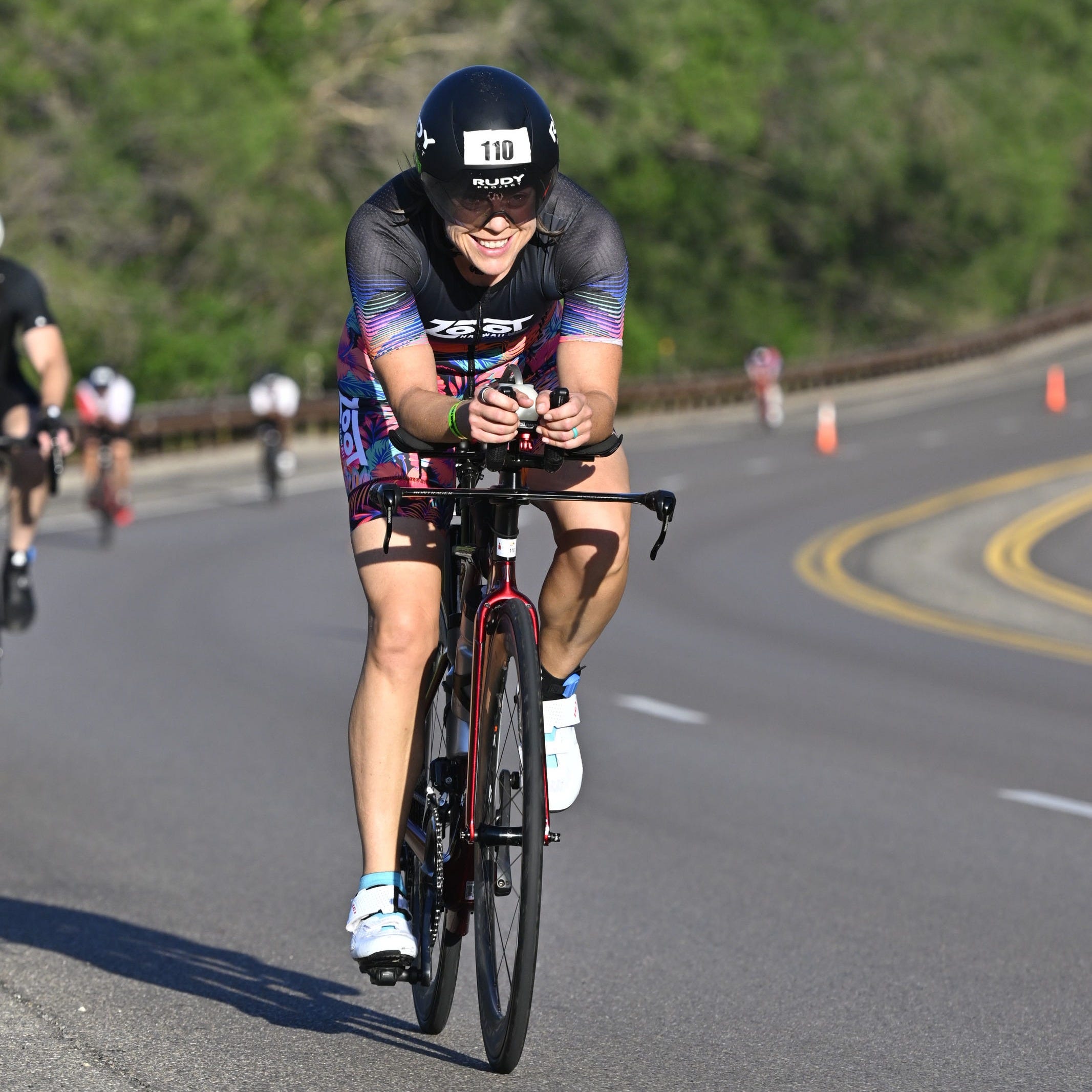
I’d needed to pee for the last ten miles of the bike, so I stopped at a porta potty on the way to my rack, wondering the whole time how I could make it faster. The only thing I came up with was unbuckling my helmet early.
Turns out that’s against the rules. An official flagged me down at my bike. “Number 110, you got a yellow card.” Twenty-five years of racing and I had somehow never learned you’re not supposed to unclip your helmet before it’s racked. I served my thirty seconds, laughed about it, and headed out onto the run course, encouraged by all the familiar faces I saw right away.
What I Could Do
I’d been dealing with that hamstring injury since last August, first on one side after Boise 70.3, then the other side after Boston, likely from compensating. It had been healing, slowly, and a few recent runs had given me hope. The course was three loops with rolling hills, uphill for the first mile, and I made it maybe a hundred yards before my body told me to walk.
Before every race I collect prayer requests from people, something I’ve done for years, and working through that list when things get hard pulls my attention off my own discomfort and onto something bigger than the next aid station.
The first loop was rough. I tried every trick I know, reminding myself that any running would be faster than walking, telling myself walking felt worse even though I genuinely couldn’t decide if that was true, repeating my go-to mantra, no regrets, and thinking, honestly, that I was probably going to have some anyway. I saw the top three women run by behind their lead bikes and cheered for the one I knew, and I found Todd on an out and back stretch where he yelled, “I love you, baby!” and I yelled it back, and a stranger behind me yelled, “I love you guys!” so I yelled back, “I love you, man!” It was silly and it helped more than it should have. So did seeing so many familiar faces out there, other athletes I knew on the course and friends who’d come out to watch. It changed how the whole day felt.
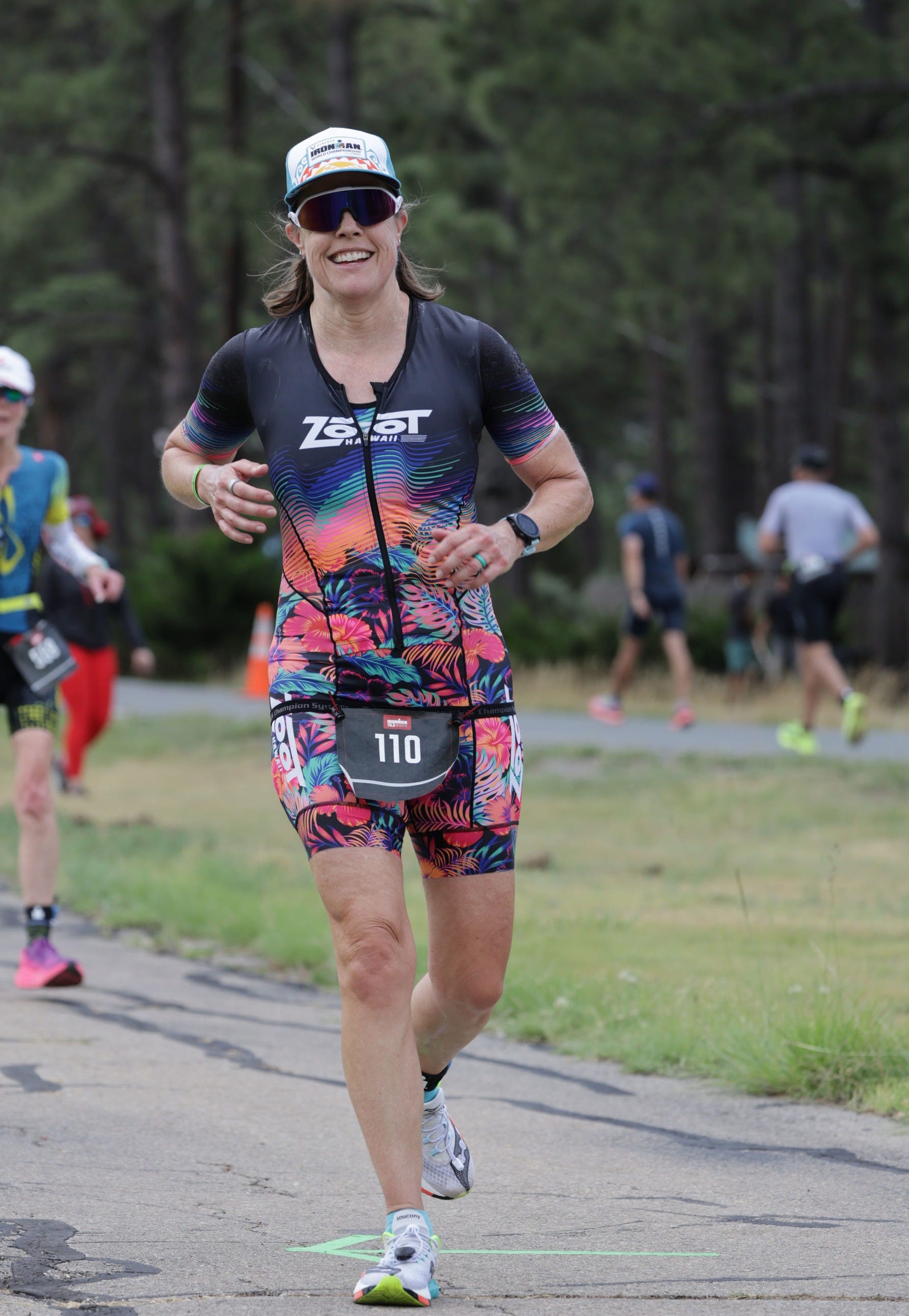
Somewhere on the second loop, things started to change. I stopped paying attention to the numbers, and even to how I felt, and started paying attention to what I could do instead. I leaned harder into praying through my list, and I started noticing anything that felt like improvement over the first loop, even small things. I kept reminding myself that anything was possible, and I thought about something my coach had told me before the race, that this was going to be a race of attrition and I probably wasn’t the only one out there struggling. That’s what kept me moving when the hard parts hit. By the third loop I finally felt like I had it in me to run the whole thing, hills and aid stations included, and I finished it feeling closer to how I’d hoped to feel from the start.
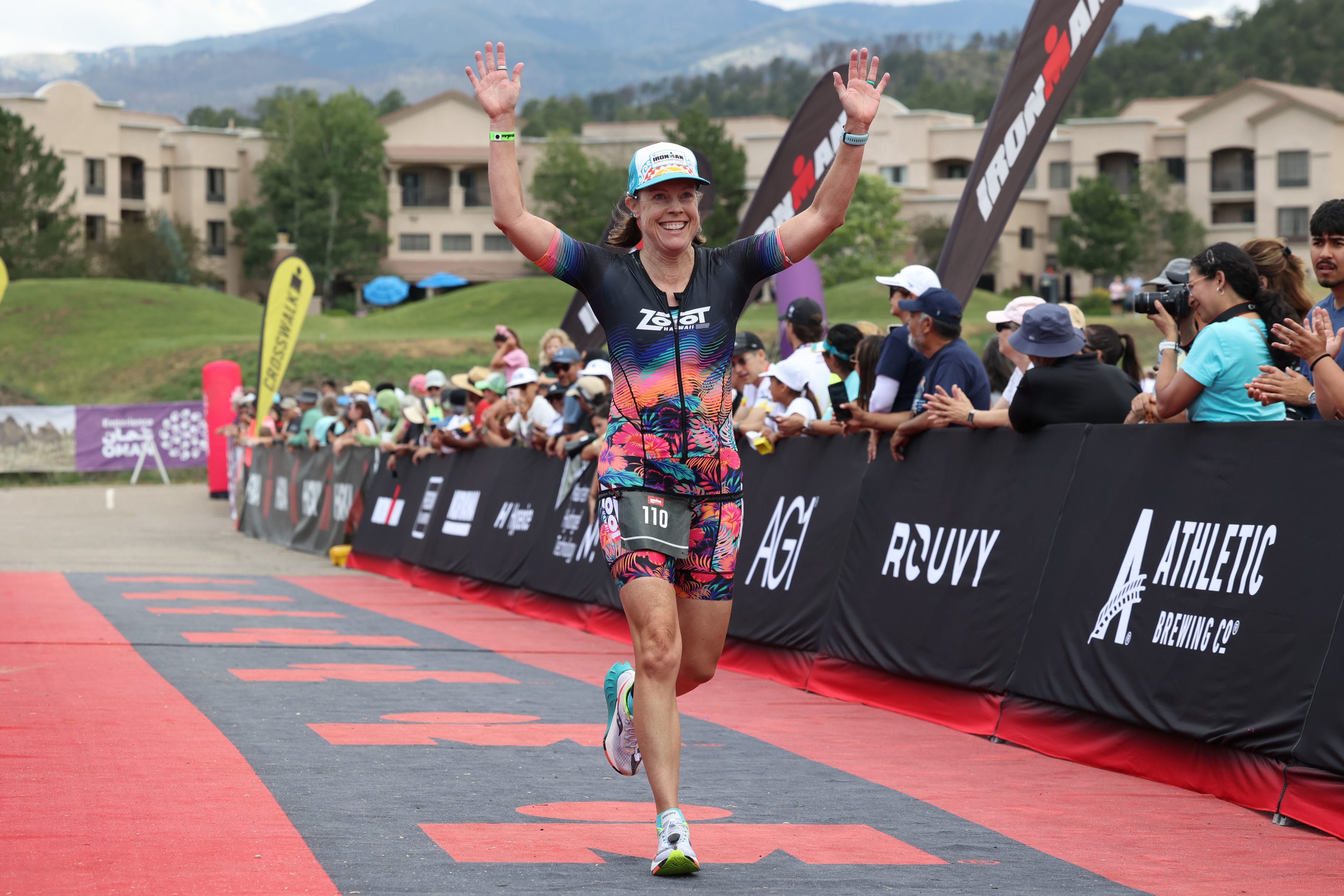
I came through the crowd, put my sunglasses on the back of my head for the finish photo, and ran down the chute with my arms in the air. Todd had already finished and was waiting for me. I cried, the way I always do when there’s nothing left in the tank, and we hugged it out.
The Story That Actually Happened
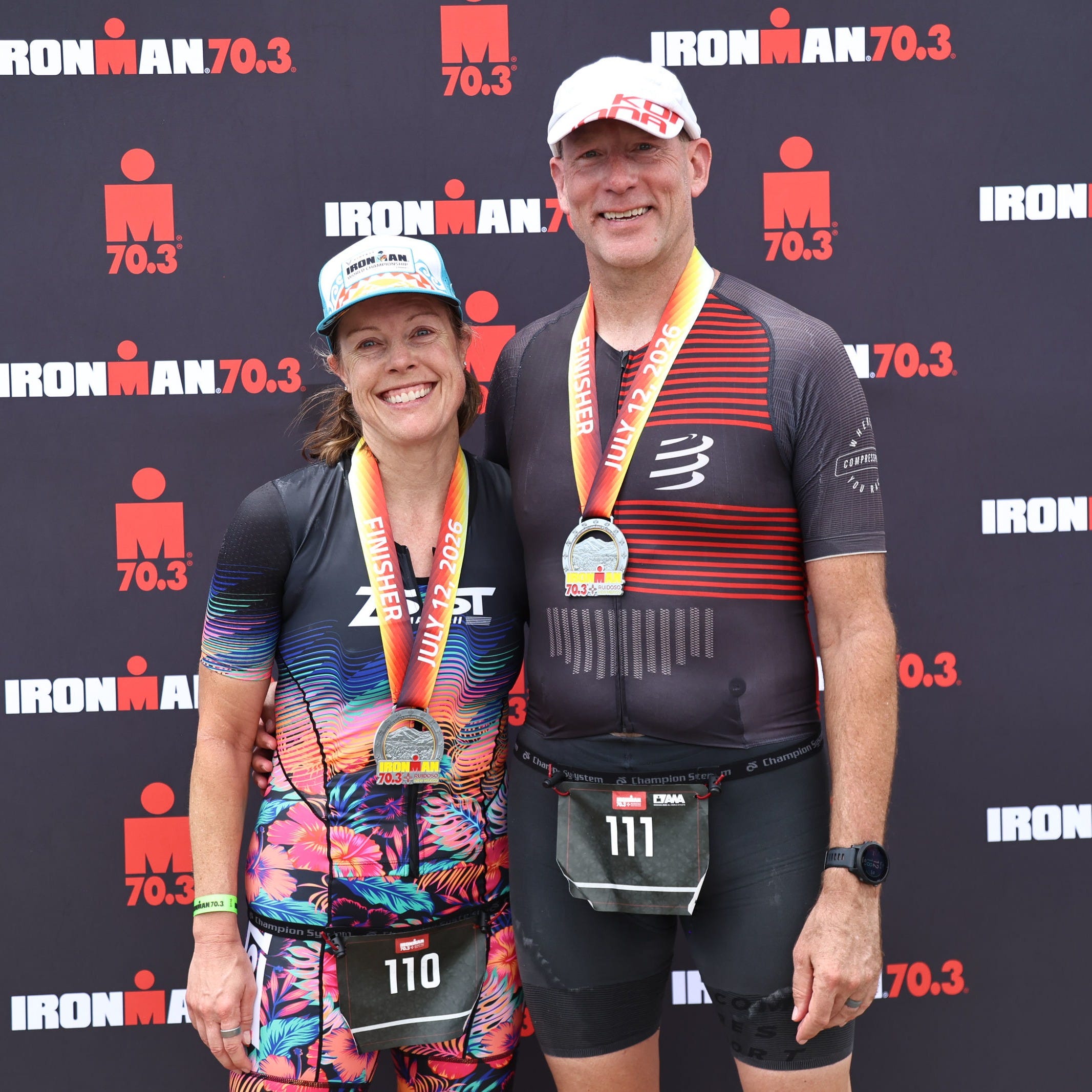
Total time just under six hours, third in my age group, and one of the last few slots to next year’s 70.3 World Championship in Chattanooga. Less than five minutes separated me from fourth place. If I’d let that first loop be the whole story, none of that happens.
Todd also beat me at this distance for the first time in years, after being sick the weeks leading in, and I don’t think I’ve ever been happier to lose to him. We did a little Instagram interview with a local announcer after the race if you want to check it out here.
There were plenty of stretches on that first loop when it would have been easy to decide the day wasn’t going to go the way I’d hoped, and the story I was telling myself out there wasn’t close to the story that actually happened. That’s true more often than I’d like to admit, and it’s the thing I keep having to relearn, race after race.
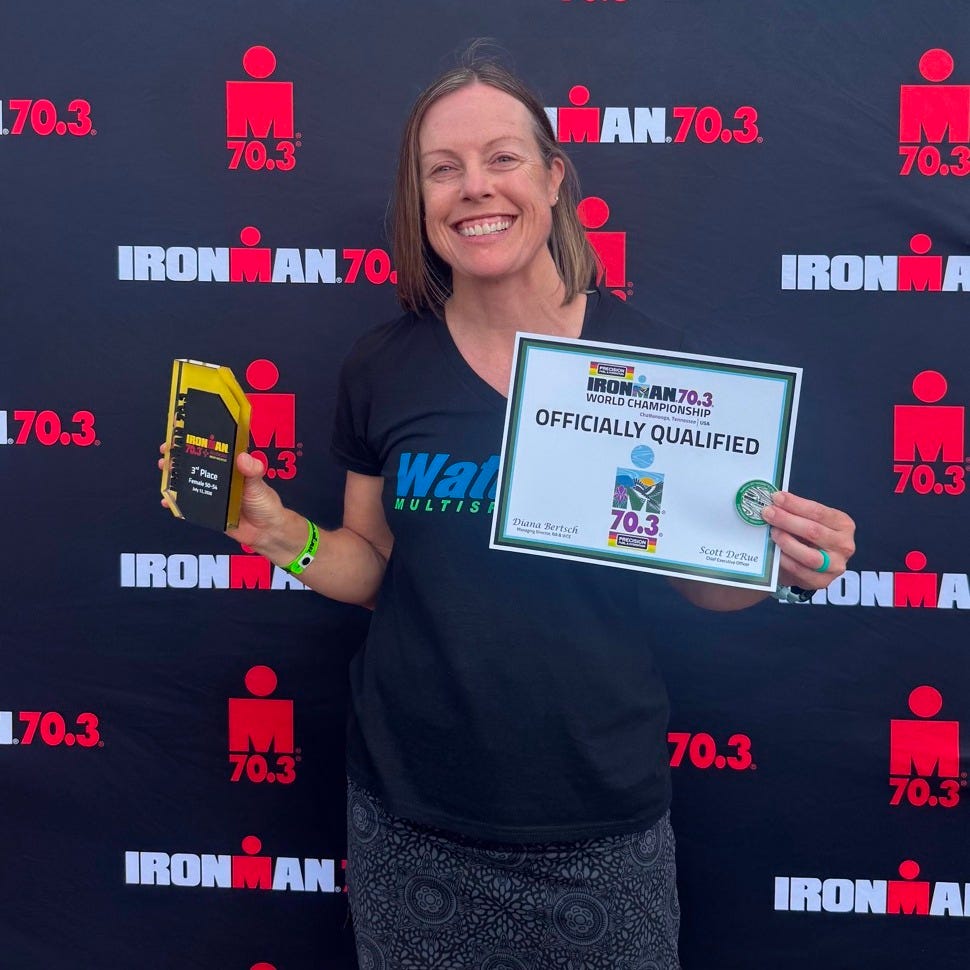
We’re already hoping this race comes back next year, and if it does, we’ll be there, because I know there’s more in me than I showed on this course. For now, I’m turning my attention to getting this hamstring fully healed and getting ready for the Athens Marathon in November.
Twenty-three years ago, one small decision led me to start asking what else was possible. I’m still asking it, and these days I’m asking something else too, right in the middle of the hard part, when I’m most sure I already know how the story ends. What else could actually be true?
Subscribe to Powered by Possibility for stories, insights and inspiration for living a life of possibility through the lens of the nervous system.
Love this so much 💖 so inspiring! I'm training for a 50K in March and no clue what to do after. IM ?! 😜